Meta description: Young people make up a significant share of the population and hold the key to sustainable growth. Discover why youth engagement is essential to effective population control and family planning.
Across the world, and especially in countries with youthful demographics like Pakistan, young people are not just the future — they are a driving force in shaping population trends today. With over 60% of Pakistan's population under the age of 30, the choices this generation makes about family planning, education, and reproductive health will directly determine the country's social and economic trajectory for decades to come. Understanding the role of youth in population control is essential to building healthier communities and a more sustainable future.
Why Youth Are Central to Population Control
Population control isn't simply about reducing numbers — it's about ensuring that population growth aligns with a country's capacity to provide resources, opportunities, and quality of life for its citizens. Youth sit at the center of this equation for several reasons:
They are the next generation of parents. Decisions made during adolescence and early adulthood about marriage age, family size, and contraceptive use shape fertility rates for the next generation.
They are highly receptive to education and behavior change. Young people are often more open to new information, making them ideal audiences for awareness campaigns on reproductive health and family planning.
They influence their peers and communities. Youth-led advocacy and peer education can shift social norms faster than top-down messaging alone.
They will inherit the consequences. Unmanaged population growth strains healthcare, education, employment, and natural resources — all systems that young people will depend on throughout their lives.
Key Ways Youth Can Contribute to Population Control
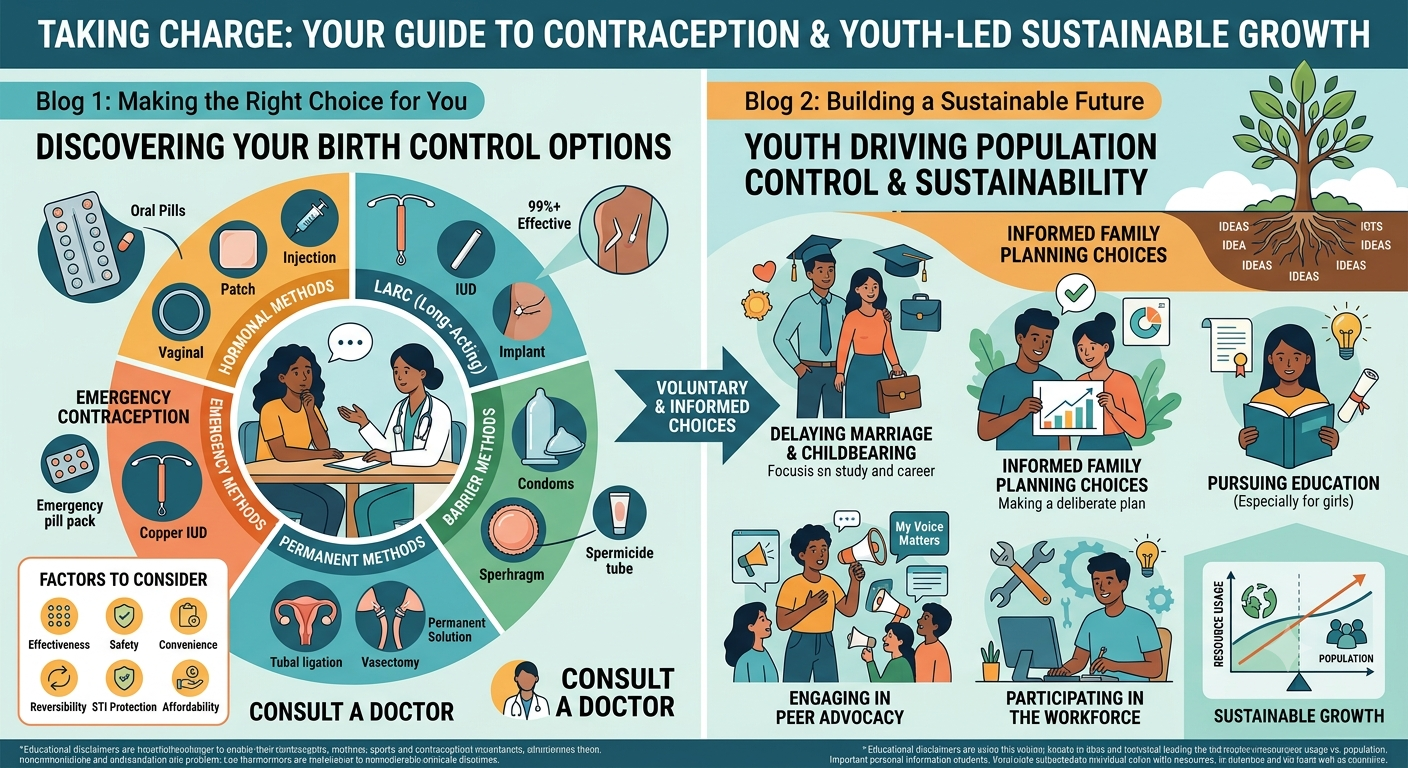
1. Delaying Early Marriage and Childbearing
Early marriage and adolescent pregnancy remain significant contributors to population growth and are often linked to poorer health outcomes for both mother and child. Encouraging young people to delay marriage and first pregnancy — through education, economic opportunity, and awareness — can meaningfully reduce fertility rates while improving maternal and child health.
2. Making Informed Choices About Family Planning
Access to accurate information about contraceptive methods empowers young people to plan pregnancies responsibly. When youth understand their options and have access to family planning services, they are better equipped to make voluntary, informed decisions about if and when to start a family.
3. Pursuing Education, Especially for Young Women
Education, particularly for girls, is one of the most consistent predictors of lower fertility rates worldwide. Educated young women tend to marry later, have fewer children, and are more likely to space births — all of which contribute to healthier families and slower population growth.
4. Engaging in Peer Advocacy
Youth-led awareness campaigns, school and university outreach programs, and social media advocacy can normalize conversations around reproductive health that might otherwise be considered taboo. When young people hear messages from peers rather than authority figures, they are often more receptive and engaged.
5. Participating in the Workforce
Economic empowerment reduces reliance on large families as a source of labor or old-age security — a driving factor behind high fertility rates in many developing regions. Youth employment and entrepreneurship indirectly support population stabilization by shifting family planning motivations toward quality of life over family size.
The Bigger Picture: Youth as Changemakers
Population control efforts succeed when young people are treated not as passive recipients of policy, but as active participants in shaping it. Youth-focused reproductive health programs, comprehensive sexuality education, and accessible family planning services all play a role — but their impact multiplies when young people themselves become advocates within their families, schools, and communities.
Investing in youth today — through education, healthcare access, and economic opportunity — is one of the most effective long-term strategies for sustainable population growth. A generation empowered with knowledge and choice is a generation capable of building healthier families and a more balanced future for the country as a whole.
Conclusion
Youth are not bystanders in the population conversation — they are its most influential participants. By promoting informed decision-making, supporting access to family planning resources, and encouraging youth-led advocacy, communities can harness the energy and influence of young people to build a more sustainable and prosperous future for all.
This article is intended for general educational and awareness purposes. For personalized guidance on reproductive health and family planning, please consult a qualified healthcare provider